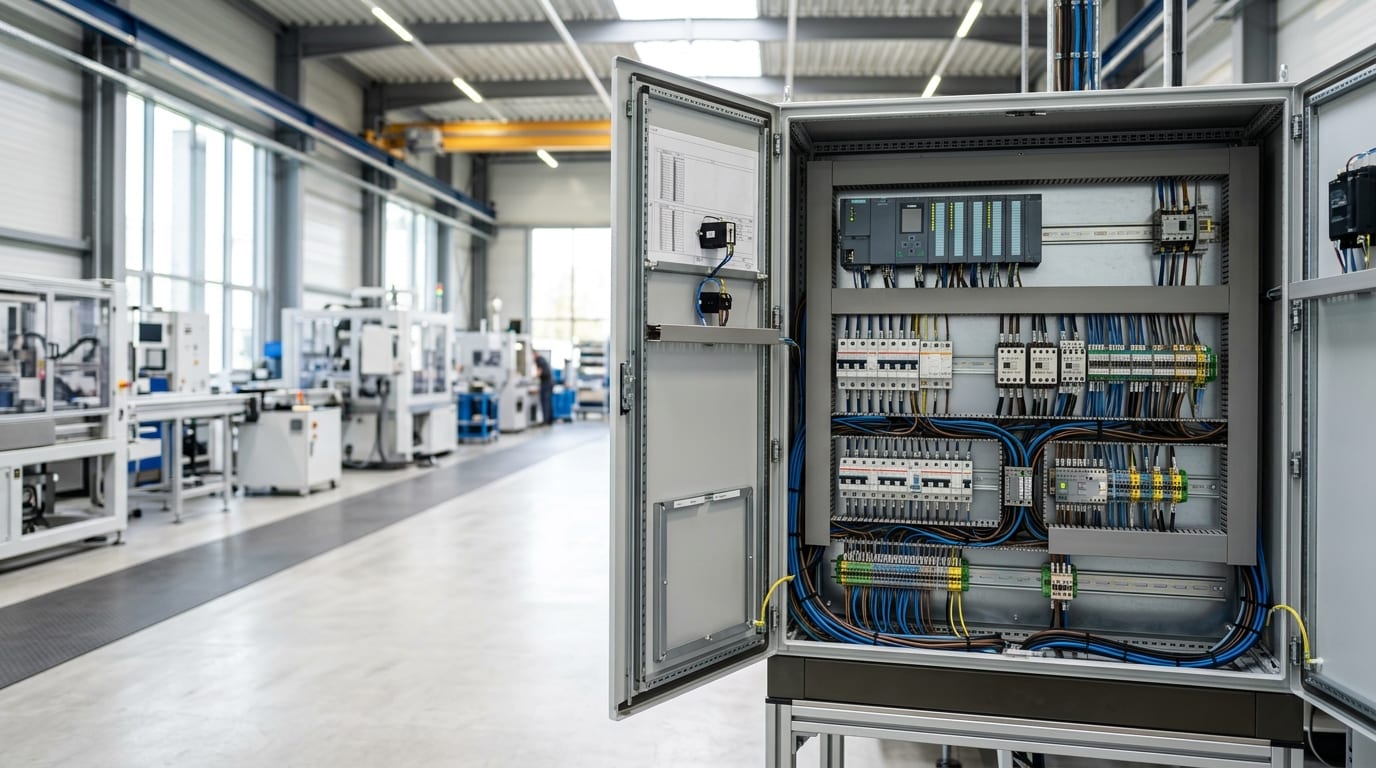
The sudden failure of the original machine manufacturer poses serious challenges for manufacturing companies. Without access to PLC source codes, wiring diagrams, or technical documentation, even a minor disruption can lead to costly downtime. Targeted support for abandoned industrial assets provides a solution in such scenarios and protects invested capital through systematic technical protection.
Brief explanation
If the original machine builder fails, downtime threatens due to control errors and missing updates. A structured inventory of PLC code, schematic diagrams, and hardware ensures the continued operation of abandoned industrial plants and provides the basis for targeted expansions or retrofits.
Support for abandoned industrial facilities: Identifying risks early
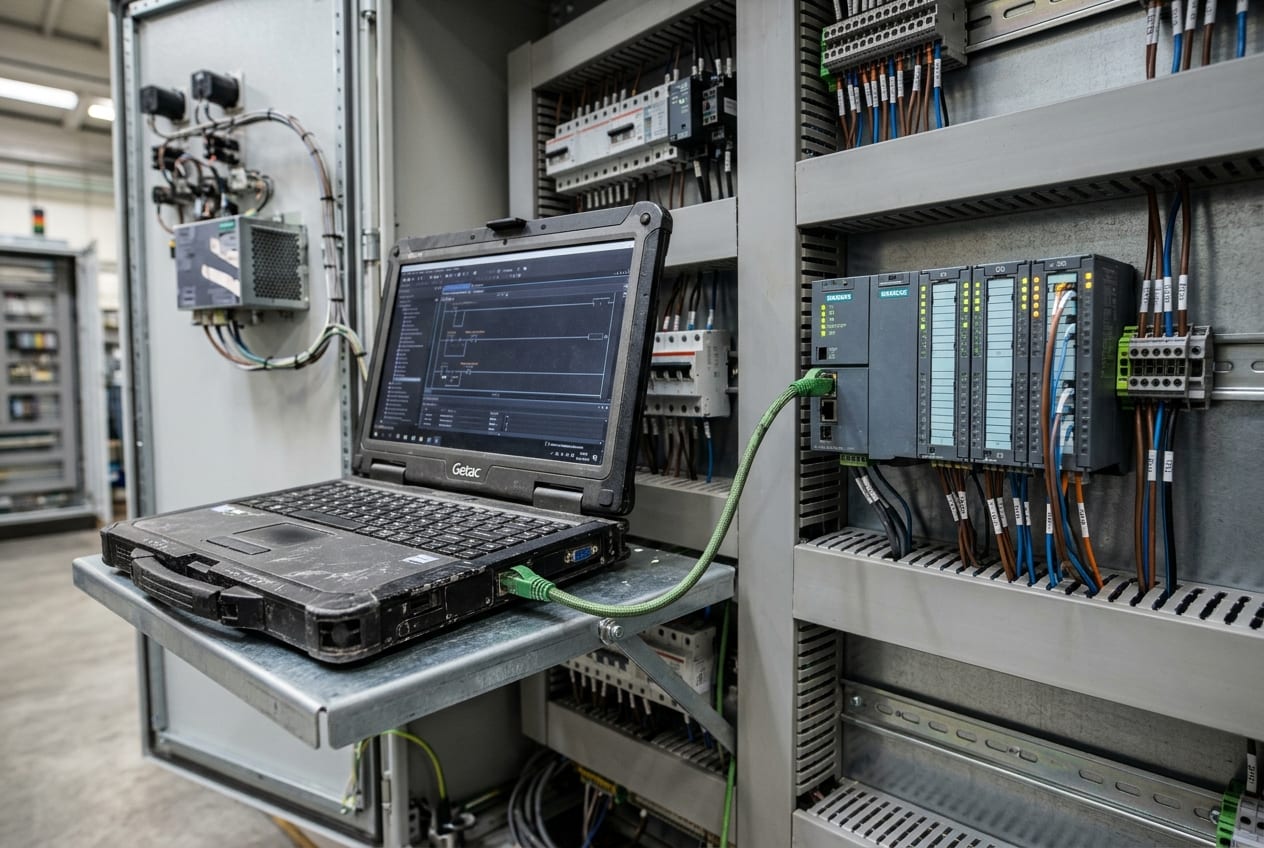
Abandoned machines – so-called „orphaned machines“ – operate stably in many companies for years until unforeseen changes become necessary. Typical risk factors are:
- Missing or incomplete software backups of the programmable controller (SPS).
- Password-protected control modules without stored access data.
- No longer available electronic components such as drive controllers or industrial PCs.
- Lack of documentation regarding subsequent modifications or interface adjustments.
In the event of a failure, full support from the manufacturer is unavailable. To avoid unplanned production outages, support for abandoned industrial plants requires in-depth, vendor-agnostic expertise in industrial control architectures.
Structured inventory as the foundation of operational safety
The foundation of any long-term security is a systematic inventory analysis. This involves recording the actual hardware and software status of the system before any acute problems arise:
- Software backup and program removal: Reading the SPS programs, insofar as this is technically supported by the respective platform (for example, in the case of Siemens, this is primarily possible with newer control generations). With operating panels and HMIs, a 1:1 image can be saved with intact equipment, since reading the visualization projects is not possible due to system constraints for direct editing. Missing symbologies or variables are subsequently reconstructed based on the documentation.
- Examination of the wiring diagrams: Comparison of the existing electrode documentation with the actual wiring assembly to correct outdated revision statuses.
- Risk assessment of drive and sensor technology: Identification of components for which no more conventional replacement is available on the market.
With this step, operators regain full sovereignty over their production facilities. A well-founded technical Support for existing systems prevents control modifications from becoming an unmanageable operational risk.
Control expansion and PLC modules without manufacturer support
When abandoned machines need to be adapted to new products or expanded with modern components such as industrial camera systems, this often fails due to rigid legacy programs. If the original manufacturer is absent, functional enhancements must be cleanly integrated into the existing control logic. Through modular PLC component development It is possible to reliably connect new sub-systems and sensors without having to replace the entire control architecture.
Retrofitting as an economic alternative to buying new machinery
If the control hardware is outdated or replacement modules are no longer available on the market, this does not necessarily mean the end of the entire system. The mechanical basic components usually have a significantly longer lifespan than the built-in electronics. By targeting specific Retrofit of the control technology Old IPCs, HMIs and SPS assemblies are being replaced by modern industry standards. The machine remains in its proven mechanical design, while the control technology is again up to date and maintainable.
Frequently Asked Questions about Support for Abandoned Industrial Facilities
Can an SPS program be read from the manufacturer without the original project?
This largely depends on the control generation and the system. With Siemens controls, direct loading of the software from the PLC is possible primarily for newer generation devices. On older platforms, it is often only possible to read compiled machine code, where comments and symbols are missing and have to be reconstructed from schematic diagrams. HMI visualizations generally cannot be read for processing, but can only be saved as a 1:1 image as long as the panel is functional.
What happens if the SPS is protected with an unknown password?
If password protection is present without existing access data, it is checked whether interface operations are possible or whether reprogramming based on the existing functional sequence and the wiring diagrams represents the more economical solution.
When is a control retrofit more economical than ongoing maintenance?
Retrofitting is worthwhile as soon as critical electronic components become no longer available on the market, downtime due to component shortages threatens, or modern safety standards and interfaces need to be upgraded.
Secure the control data and software settings of your manufacturer-independent industrial systems early on. Request technical analysis
 Deutsch
 English